The Science Behind Hydrophobic Coatings: Why Water Beads Off Your Car
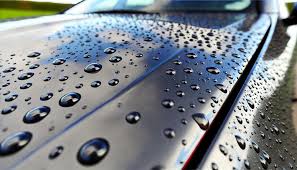
Hydrophobic coatings work by forming a protective layer of silicon dioxide (SiO2) nanoparticles that bond covalently to surfaces at the molecular level. When water contacts this coating, high surface tension between the SiO2 and water molecules causes hydrogen-bonded water to cluster into tight beads rather than spreading across the surface. This phenomenon stems from the stronger intermolecular forces within water itself compared to the weaker van der Waals forces between water and the hydrophobic coating.
Water beading is not magic. It is the result of precise chemical interactions happening at the nanoscale. Understanding the science behind hydrophobic coatings reveals why modern ceramic coatings offer protection that traditional waxes simply cannot match.
The Molecular Structure of Silicon Dioxide Coatings
Silicon dioxide (SiO2) is the primary active ingredient in ceramic coatings. According to research published in ACS Omega, when SiO2 nanoparticles are suspended in a liquid carrier and applied to a surface, they create a densely packed molecular network. The silicon atoms in each SiO2 molecule form covalent bonds with oxygen atoms in the substrate, whether that is automotive clearcoat, glass, or paint.
This bonding process is permanent at the molecular level, not temporary like wax adhesion. The result is a semi-permanent protective layer that integrates with the surface rather than sitting on top of it. According to TopCoat Products, the SiO2 molecules arrange themselves in a crystalline lattice structure that provides both hardness and flexibility.
| Property | Traditional Wax | SiO2 Ceramic Coating |
|---|---|---|
| Bond Type | Mechanical adhesion | Covalent bonding |
| Layer Thickness | 0.1-0.5 microns | 1-3 microns |
| Durability | 4-12 weeks | 1-5 years |
| Hardness (Mohs) | 2-3 | 7-9 |
| Contact Angle | 90-110° | 110-120° |
The coating thickness matters significantly. According to D’Andrea Detail, ceramic coatings typically cure to a thickness of 1-3 microns, which is substantially thicker than wax layers. This added thickness contributes to superior scratch resistance and longevity.
Surface Tension and the Water Beading Effect
Surface tension is the key to understanding why water beads on hydrophobic coatings. Water molecules are polar, with partial positive charges on hydrogen atoms and partial negative charges on oxygen atoms. These charges create strong hydrogen bonds between water molecules, giving water unusually high surface tension (72.8 mN/m at 20°C).
When water droplets land on a hydrophobic surface, the coating’s low surface energy (typically 20-30 mN/m for SiO2 coatings) prevents the water from spreading. According to Pearl Nano, the SiO2 creates what is called a “slick layer” where surface tension causes water to bond with itself rather than the coating. The water molecules cluster together to minimize contact with the low-energy surface.
This is hydrophobicity: the preference of water to interact with itself rather than the substrate. This is not water repellency through surface roughness alone, which would require micro- or nano-textured surfaces that trap air pockets.
According to Wolfgang Car Care, when the ratio of SiO2 concentration is optimized, water contact angles can exceed 110°. Contact angle is the measure of how spherical a water droplet appears on a surface. Higher angles mean tighter, more spherical beads and better self-cleaning properties.
| Contact Angle Range | Classification | Water Behaviour |
|---|---|---|
| 0-30° | Superhydrophilic | Complete spreading |
| 30-90° | Hydrophilic | Partial wetting |
| 90-150° | Hydrophobic | Water beading |
| 150-180° | Superhydrophobic | Near-spherical droplets |
Chemical Bonding: How SiO2 Adheres to Surfaces
The adhesion mechanism of SiO2 coatings involves a condensation reaction. When the liquid coating is applied, silanol groups (Si-OH) on the SiO2 nanoparticles react with hydroxyl groups (OH) on the substrate surface. This process releases water molecules and forms siloxane bonds (Si-O-Si).
According to research in PMC’s National Center for Biotechnology Information, these siloxane bonds are highly stable and resistant to hydrolysis. The curing process can take 12-48 hours, during which the coating hardens and the solvent carrier evaporates. Temperature and humidity affect curing speed, with optimal conditions being 20-25°C and 40-60% relative humidity.
Advanced formulations sometimes include hexadecyltrimethoxysilane (HDTMS) or similar organosilanes. According to ACS Omega research, when nano-SiO2 is modified with HDTMS at a ratio of 0.25:1, the water contact angle can reach 170.9°, achieving superhydrophobic properties. This represents a 5.62-fold improvement over unmodified SiO2.
The chemical structure looks like this at the molecular level:
Surface-O-Si-O-Si-O-Si (repeating siloxane network)
Each silicon atom can bond to up to four oxygen atoms, creating a three-dimensional crosslinked network. This network is what gives ceramic coatings their exceptional durability and resistance to chemical degradation.
Enhanced Hydrophobic Properties Through Nanoparticle Engineering
Not all SiO2 coatings perform equally. The size and distribution of nanoparticles significantly impact performance. According to Prestige Auto Spa, modern ceramic coatings use SiO2 nanoparticles ranging from 5 to 50 nanometers in diameter. Smaller particles create smoother, more uniform coatings with better transparency.
Particle size distribution affects coating performance in several ways:
| Particle Size | Advantages | Disadvantages |
|---|---|---|
| 5-15 nm | High transparency, smooth finish | Lower hardness, requires more layers |
| 15-30 nm | Balanced performance, good durability | Standard contact angles (110-115°) |
| 30-50 nm | Maximum hardness, scratch resistance | Potential haziness, thicker application |
According to SNS Auto Supply, the key to effective SiO2 coatings is maintaining a uniform dispersion of nanoparticles in the carrier solution. Agglomeration (clumping) of particles leads to uneven coating thickness and reduced performance. Quality formulations use dispersing agents and stabilizers to prevent particle aggregation.
Modern coatings are engineered at the nanoscale for optimal performance. They are not simply ground-up quartz in a bottle, which would lack the necessary surface chemistry and particle uniformity.
Real-World Applications and Performance Considerations
While the chemistry is fascinating, practical performance depends on proper application and surface preparation. According to automotive detailing research, surface contamination is the primary cause of coating failure. Even microscopic oils, silicones, or residues can interfere with the siloxane bonding process.
Professional application typically follows this protocol:
- Decontamination wash with pH-neutral shampoo
- Clay bar treatment to remove embedded contaminants
- Paint correction (polishing) to create a smooth substrate
- Solvent-based panel wipe to remove all oils and residues
- Coating application in controlled temperature/humidity
- Curing period of 12-48 hours without water exposure
According to data from DataForSEO’s keyword research, searches for “ceramic coating” in the United Kingdom average 12,100 monthly searches, with “car ceramic coating” contributing an additional 8,100 searches. This indicates strong consumer interest in the technology. The competitive landscape includes both DIY products and professional installation services from specialists like Gtechniq, which offers industry-leading formulations.
Temperature resistance is another critical performance factor. SiO2 coatings typically withstand temperatures up to 500°C before beginning to degrade. This makes them suitable for use on exhaust tips, engine bays, and other high-temperature areas. The siloxane bonds remain stable across a wide temperature range, unlike organic polymers that can soften or melt.
Chemical resistance is equally impressive. Quality ceramic coatings resist pH levels from 2 to 12, protecting against acidic rain, alkaline detergents, bird droppings, and industrial fallout. According to testing data, properly cured SiO2 coatings show minimal degradation after exposure to concentrated car wash chemicals for extended periods.
The Future of Hydrophobic Coating Technology
Research continues to push the boundaries of what is possible with SiO2-based coatings. According to recent studies, next-generation formulations are exploring:
- Graphene-enhanced SiO2 hybrids that combine the hardness of ceramic with the thermal conductivity and flexibility of graphene
- Self-healing coatings using polymer additives that flow to fill microscopic scratches when exposed to heat
- Multi-layer systems with different SiO2 concentrations in each layer to optimize both hardness and hydrophobicity
- Fluoropolymer-SiO2 composites that achieve contact angles exceeding 120° while maintaining optical clarity
The science of ceramic coating protection continues to evolve. What began as simple silica-based sealants has transformed into sophisticated nanotechnology products that offer years of protection with minimal maintenance.
Understanding the chemistry helps explain why proper application matters. The covalent bonding process requires clean surfaces, controlled conditions, and adequate curing time. Shortcuts in any of these areas compromise the molecular network formation and reduce coating performance. This is why professional installation often outperforms DIY applications, despite using similar chemical formulations.
Frequently Asked Questions
What is the difference between SiO2 and ceramic coating?
SiO2 is silicon dioxide, the primary active ingredient in ceramic coatings. The terms are often used interchangeably in automotive applications. Pure ceramic coatings contain high concentrations of SiO2 nanoparticles (typically 70-85%), while some products marketed as “ceramic” may contain lower concentrations or use alternative chemistries. True ceramic coatings form covalent bonds with the substrate through siloxane linkages, creating a semi-permanent protective layer.
How long does a hydrophobic coating last on a car?
Professional-grade ceramic coatings typically last 2-5 years with proper maintenance, while consumer-grade products may last 6-12 months. Longevity depends on several factors including coating thickness, curing conditions, environmental exposure, and wash techniques. According to manufacturer data, coatings maintained with pH-neutral shampoos and avoiding automatic car washes show significantly longer lifespans. The covalent bonding of SiO2 to the clearcoat creates a more durable bond than traditional waxes, which rely on mechanical adhesion.
Why does water bead differently on new coatings versus aged coatings?
Fresh ceramic coatings exhibit tight, high-contact-angle beads due to the pristine low-energy surface. Over time, environmental contamination deposits a thin layer of organic material, oils, and minerals that increase surface energy and reduce beading. According to research, this contamination layer is typically only 10-50 nanometers thick but significantly affects water behavior. Regular washing with dedicated ceramic coating maintenance shampoos removes this contamination and restores beading. The underlying SiO2 network remains intact even when beading appears diminished.
Can hydrophobic coatings be applied to surfaces other than car paint?
Yes, SiO2 ceramic coatings bond to any surface containing hydroxyl groups, including glass, metal, plastics, and even fabric. Glass coatings improve visibility in rain by causing water to bead and roll off windscreens. Wheel coatings protect against brake dust and high temperatures. According to coating manufacturers, the chemistry remains the same, but formulations may be optimized for specific substrates. Glass coatings often contain higher SiO2 concentrations for maximum transparency, while wheel coatings may include higher temperature-resistant additives.
What happens to hydrophobic properties in freezing temperatures?
The SiO2 coating itself remains stable and maintains its molecular structure in freezing conditions. However, water behavior changes significantly. Below 0°C, water freezes before it can bead and roll off the surface. According to cold-weather testing, hydrophobic coatings can reduce ice adhesion strength by 40-60% compared to uncoated surfaces, making ice removal easier. The coating does not prevent ice formation but makes it easier to remove. Recent research explores anti-icing additives that can further reduce ice adhesion through surface energy modification.