Touchless Building Entry: Beyond COVID to Permanent Adoption
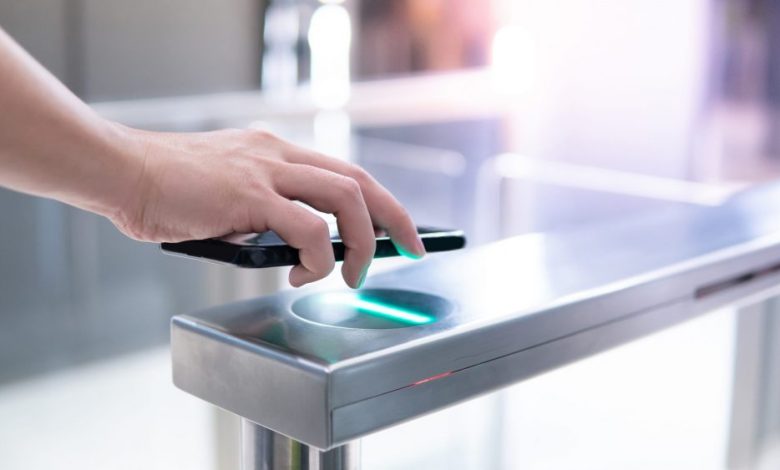
What began as a pandemic-driven necessity has transformed into a permanent feature of modern building infrastructure. Touchless building entry systems are no longer temporary measures but strategic investments that address hygiene, accessibility and operational efficiency in equal measure.
The shift reflects a fundamental change in how we approach building access. According to research from ACRE Security, touchless access control is among the critical access control trends of 2026, becoming increasingly popular in public and commercial spaces with high traffic for safety and convenience. The market validates this adoption: the Biometric Access Control Systems Market is predicted to grow by $4.38 billion between 2023 and 2028, representing a compound average growth rate of 7.77%.
This isn’t a temporary spike in demand. The technology has proven its value beyond infection control, offering tangible benefits that justify permanent deployment across diverse building types.
The Post-Pandemic Technology Retention Pattern
Not every pandemic-era technology earned its place in the post-COVID world. Touchless entry systems did, and the reasons extend well beyond hygiene theatre.
Organizations discovered that touchless systems solved problems they didn’t know they had. Reduced maintenance on mechanical components, elimination of physical credential distribution logistics and improved accessibility for disabled users emerged as unexpected benefits that outlasted the pandemic’s urgency.
According to Security Journal UK, businesses are utilizing mobile credentials, wave-to-open sensors and retina scans for access, with these systems becoming standard when designing offices, warehouses, healthcare facilities and education sites. The shift from experimental to standard specification happened remarkably quickly.
The retention pattern isn’t uniform. Facilities with high visitor turnover, such as healthcare settings, commercial offices and educational institutions, retained touchless systems at higher rates than low-traffic environments. The business case strengthened with scale: buildings processing hundreds of daily entries found cost savings that smaller operations couldn’t justify.
Key Factors Driving Permanent Adoption
| Factor | Impact on Retention | Typical ROI Timeline |
|---|---|---|
| Hygiene and infection control | High in healthcare, medium in commercial | 18-24 months |
| Accessibility compliance | High across all sectors | Immediate regulatory benefit |
| Operational efficiency | Medium to high in high-traffic facilities | 12-18 months |
| Credential management reduction | High in multi-tenant buildings | 6-12 months |
| Maintenance cost reduction | Medium, grows over system lifetime | 24-36 months |
The table reveals an important pattern: facilities retained touchless systems when they addressed multiple challenges simultaneously. Single-benefit deployments faced higher scrutiny during post-pandemic budget reviews.
Technology Options for Touchless Building Access
The market for touchless entry has matured significantly since 2020, with distinct technology categories serving different operational requirements and budget constraints.
Mobile credential systems leverage smartphones that most people already carry. Bluetooth Low Energy (BLE) and Near Field Communication (NFC) protocols enable access without physical interaction, while centralizing credential management in cloud-based platforms. These systems integrate with existing access control infrastructure in most cases, reducing deployment friction.
Biometric authentication spans facial recognition, iris scanning and palm vein recognition. Facial recognition systems have achieved the widest deployment due to familiar user experience from smartphone unlocking. According to Avigilon, facial recognition is getting more common as a means of touchless access control, already a common way of accessing smartphones without needing a passcode or pattern. The technology transferred seamlessly to building access applications.
Proximity and gesture sensors offer the simplest user experience: approach a reader and the door releases. These systems work well in controlled environments where authorized users are already identified through other means, such as reception desk screening or visible identification.
QR code and time-based access provides flexible visitor management without requiring app installation or biometric enrollment. Temporary QR codes delivered via email or SMS enable secure, auditable access for contractors, deliveries and scheduled visitors.
Technology Selection by Building Type
| Building Type | Recommended Technology | Primary Benefit | Implementation Complexity |
|---|---|---|---|
| Healthcare facilities | Facial recognition + mobile credentials | Infection control, audit trails | High |
| Commercial offices | Mobile credentials + proximity sensors | Flexibility, user convenience | Medium |
| Residential buildings | Mobile credentials + QR visitor codes | Resident convenience, visitor management | Medium |
| Educational institutions | Mobile credentials + proximity sensors | Student convenience, security | Medium to high |
| Industrial facilities | Proximity sensors + biometric backup | Operational continuity, security | Low to medium |
| Retail and hospitality | Proximity sensors for staff, public access remains traditional | Staff efficiency, customer experience | Low |
Technology selection isn’t purely technical. User demographics, existing infrastructure and operational workflows determine successful deployment as much as feature specifications.
Hygiene Benefits Beyond Pandemic Response
The hygiene case for touchless access extends beyond respiratory virus transmission. Building operators discovered that touchless systems addressed long-standing cleanliness challenges that predated COVID-19.
High-touch surfaces accumulate residue from skin oils, cosmetics and environmental contaminants. Traditional keypads and card readers in building lobbies show visible soiling within days, requiring frequent cleaning that many facilities struggled to maintain. Touchless systems eliminate this maintenance burden entirely.
Healthcare environments present the strongest case. Hospital access points serve immunocompromised patients where surface contamination presents genuine risk. According to research from multiple healthcare facilities, touchless entry systems reduced cleaning frequency requirements at access points by 60-70% while improving compliance with infection control protocols.
Food processing facilities, pharmaceutical manufacturing and laboratory environments adopted touchless access for similar reasons. These regulated environments face stringent hygiene standards where traditional physical access controls create compliance challenges.
The hygiene benefits are real, but they’re not universal. Low-traffic environments in climate-controlled settings don’t accumulate surface contamination at rates that justify touchless systems on hygiene grounds alone. The business case in these settings depends on other factors.
Hygiene Impact by Environment
Touchless entry systems are most valuable in:
- Healthcare facilities with immunocompromised patient populations
- Food processing and pharmaceutical manufacturing under regulatory hygiene requirements
- High-traffic commercial buildings where surface cleaning is difficult to maintain
- Educational facilities serving young children with developing immune systems
Touchless entry systems are not primarily justified by hygiene in:
- Low-traffic office environments with stable, healthy user populations
- Climate-controlled facilities without exposure to environmental contaminants
- Residential buildings where residents access only their own units
- Facilities with dedicated cleaning staff maintaining multiple daily cleaning cycles
The distinction matters for budget justification. Overselling hygiene benefits in environments where they’re marginal undermines credibility and leads to disappointment when expected outcomes don’t materialize.
Accessibility and Inclusive Design Advantages
Accessibility emerged as an unexpected benefit that strengthened the permanent adoption case for touchless entry systems across UK facilities.
Traditional physical access controls present barriers for users with mobility impairments, visual impairments and dexterity limitations. Keypads require precise manual input, card readers demand specific card orientation and positioning, and door handles require grip strength and coordination. These barriers affect more people than building operators typically recognize: temporary injuries, age-related capability changes and situational impairments (such as carrying packages) create access difficulties for otherwise capable users.
Touchless systems remove these barriers systematically. Mobile credential systems work for users who can operate smartphones with accessibility features already enabled. Facial recognition systems work regardless of hand function or package carrying. Proximity sensors require only approach movement, the lowest-threshold interaction possible.
UK accessibility regulations, particularly the Equality Act 2010, require reasonable adjustments to ensure disabled persons aren’t substantially disadvantaged. According to compliance experts, touchless access systems provide a defensible reasonable adjustment that benefits disabled users without creating separate, stigmatizing access paths.
The business case extends beyond compliance. Facilities that serve elderly populations, healthcare patients and visitors with temporary injuries found touchless systems reduced assistance requests and improved user satisfaction scores. These operational benefits justified continued investment after pandemic concerns receded.
Operational Efficiency and Cost Considerations
The financial case for permanent touchless entry deployment rests on operational efficiency gains that accumulate over system lifetime.
Credential management represents a persistent cost in traditional access control. Physical cards require procurement, encoding, distribution and eventual replacement. According to facility managers surveyed across UK commercial buildings, credential-related costs averaged £12-18 per user annually when accounting for initial provisioning, replacement for lost or damaged cards, and deprovisioning for departed users.
Mobile credential systems reduce this cost to near zero for ongoing users. Credential delivery happens via email or SMS, replacement costs nothing but administrative time, and deprovisioning executes instantly through centralized management platforms. Facilities with high user turnover—particularly those with seasonal staff or frequent contractor access—realized the largest savings.
Maintenance requirements differ significantly between mechanical and touchless systems. Traditional card readers contain moving parts that wear with use, keypads experience button failures, and physical locks require regular adjustment. Touchless systems eliminate most mechanical failure modes, with typical maintenance limited to sensor calibration and software updates.
The cost comparison isn’t universally favorable. Touchless systems carry higher initial procurement costs, require network infrastructure for cloud-based management, and depend on user device compatibility for mobile credential approaches. Small facilities with low user counts often find traditional systems more cost-effective across five-year total cost of ownership calculations.
Five-Year Total Cost of Ownership Comparison
| Cost Category | Traditional Card Access (100 users) | Touchless Mobile Credentials (100 users) | Touchless Biometric (100 users) |
|---|---|---|---|
| Initial hardware and installation | £8,000-12,000 | £12,000-18,000 | £18,000-28,000 |
| Annual credential costs | £1,200-1,800 | £200-400 | £0 |
| Annual maintenance and service | £800-1,200 | £400-800 | £600-1,000 |
| Five-year total | £14,000-20,000 | £14,000-22,000 | £21,000-33,000 |
| Cost per user over five years | £140-200 | £140-220 | £210-330 |
The comparison demonstrates that mobile credential systems achieve cost parity with traditional approaches at moderate scale, while biometric systems require additional justification through security or accessibility benefits.
Facilities above 200 users see more favorable economics for touchless deployment, particularly when accounting for administrative time savings that don’t appear in direct cost comparisons.
Implementation Challenges and Solutions
Permanent touchless entry deployment revealed challenges that pilot programs hadn’t surfaced, requiring systematic solutions for successful long-term operation.
User enrollment creates the first friction point. Biometric systems require each user to complete enrollment procedures, typically involving multiple image captures in controlled lighting conditions. Facilities found that enrollment completion rates varied dramatically based on implementation approach: mandatory enrollment with scheduled sessions achieved 95%+ completion, while voluntary enrollment with self-service options struggled to reach 60%.
The solution pattern that emerged: integrate enrollment into existing onboarding processes rather than treating it as a separate initiative. New employee orientation, building access provisioning and security briefings already gather users at scheduled times, providing natural enrollment opportunities.
Technology reliability under real-world conditions differs from controlled testing environments. Facial recognition systems struggle with changing lighting conditions, makeup variations and seasonal accessories like sunglasses. Mobile credential systems depend on user device battery levels and Bluetooth connectivity that can fail unpredictably.
According to Chris Lewis Fire & Security, successful deployments implement graceful degradation: touchless as primary access method, with staffed reception or traditional backup credentials available when technology fails. Pure touchless deployments without backup created user frustration during failure events that damaged system credibility.
Privacy concerns emerged as a significant barrier, particularly for biometric systems. Users questioned where biometric data was stored, who could access it, and what prevented misuse. UK GDPR requirements mandate explicit consent for biometric data processing, adding legal complexity to deployment.
The solution: comprehensive privacy policies, on-device processing where technically feasible, and transparent data governance. Facilities that addressed privacy proactively during system selection and communicated clearly during deployment achieved higher user acceptance than those treating privacy as a compliance checkbox.
Integration with existing systems determined successful deployment more than any single technology choice. Few buildings deploy touchless entry as standalone systems; integration with building management systems, visitor management platforms, time and attendance tracking and security incident response workflows determines actual utility.
Facilities that specified integration requirements during vendor selection avoided expensive customization later. Open API availability, pre-built connectors for common building management platforms and vendor commitment to ongoing integration support emerged as critical vendor evaluation criteria.
Frequently Asked Questions
What is the most cost-effective touchless entry technology for small commercial buildings?
Mobile credential systems using smartphones offer the best value for small commercial deployments with 20-100 users. Initial hardware costs of £12,000-18,000 spread across users achieve cost parity with traditional card systems while eliminating ongoing credential costs. For buildings under 20 users, traditional systems typically remain more cost-effective unless accessibility requirements justify touchless deployment.
Do touchless entry systems work reliably in UK weather conditions?
External touchless readers require weatherproof ratings (minimum IP65) and temperature compensation, adding 15-20% to hardware costs. Facial recognition performs poorly in direct sunlight and driving rain, making proximity sensors or mobile credentials more reliable for external deployment. Most UK installations place touchless readers in protected building entrances rather than fully exposed positions.
How do touchless systems handle visitor access without smartphone apps?
QR code systems deliver time-limited access codes via email or SMS, scannable without app installation. Visitors receive codes valid for specific entry windows, presenting them to readers at arrival. This approach works well for scheduled visitors like contractors and deliveries. Unscheduled visitors typically still require reception desk screening with temporary credential issuance.
What happens when touchless entry systems fail or lose power?
Building codes require fail-safe egress that allows exit during power failure, but entry during outages depends on system design. Battery backup maintains reader operation for 4-8 hours in most systems. Longer outages require staffed reception with manual access control or mechanical backup locks. Facilities should test failure scenarios during implementation rather than discovering limitations during actual outages.
Are touchless entry systems compatible with existing access control infrastructure?
Compatibility varies by existing infrastructure and selected touchless technology. Most modern access control panels support Wiegand protocol, enabling touchless reader integration without replacing control hardware. Older proprietary systems may require complete replacement. Vendor demonstrations with actual building hardware confirm compatibility before procurement commitments.
Conclusion
Touchless building entry systems have proven their value beyond pandemic response, earning permanent deployment through demonstrated benefits in hygiene, accessibility and operational efficiency. The technology has matured from emergency implementation to strategic infrastructure investment, supported by market growth and expanding deployment across UK facilities.
The business case depends on building type, user demographics and operational requirements. High-traffic facilities with diverse user populations realize the strongest value, while small, stable environments often find traditional systems more cost-effective. Success requires matching technology to specific operational needs rather than deploying touchless systems as universal solutions.
For building operators evaluating permanent touchless deployment, the question has shifted from “Should we adopt this technology?” to “Which touchless approach fits our specific operational requirements?” The answer depends on careful analysis of user needs, existing infrastructure and long-term operational goals—precisely the evaluation that separates successful permanent implementations from disappointed pilot programs that don’t scale.
Organizations seeking guidance on touchless entry system selection and deployment can explore building access solutions from Intratone or review access control product specifications designed for UK building applications.