Poštna banka Slovenije: History, Role, and Banking Legacy
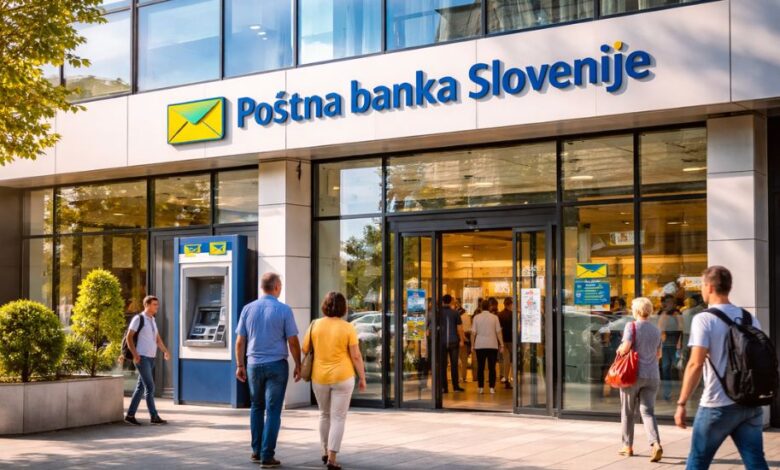
Poštna banka Slovenije (PBS) occupies a unique and important place in the financial history of Slovenia. Established in the early years of the country’s independence, the bank represented a hybrid model that combined traditional banking services with the extensive reach of the national postal network. This approach aimed to bring financial services closer to citizens, particularly in smaller towns and rural areas, at a time when Slovenia was undergoing rapid economic and institutional transformation.
Although Poštna banka Slovenije no longer exists today as an independent legal entity, its influence continues through its integration into one of Slovenia’s major banking institutions. Understanding PBS means understanding a key chapter in the development of Slovenian retail banking, financial inclusion, and the strategic use of public infrastructure for economic growth.
Historical Background and Foundation
Poštna banka Slovenije was founded in 1992, shortly after Slovenia declared independence in 1991. The early 1990s were a formative period for the country, marked by the transition from a socialist economic system to a market-oriented economy. This transition required the creation of new financial institutions capable of supporting businesses, households, and the emerging private sector.
The idea behind Poštna banka Slovenije was both practical and innovative: Slovenia already had a dense and trusted postal network, and leveraging this infrastructure for banking services could dramatically increase access to financial products. The postal system had long been a familiar and reliable presence in citizens’ daily lives, making it a natural partner for a retail-focused bank.
From its inception, PBS was designed to complement the existing banking sector rather than compete aggressively with larger commercial banks. Its mission emphasized accessibility, simplicity, and nationwide coverage, particularly for populations that were underserved by traditional banking branches.
Ownership Structure and Institutional Development
Over the years, Poštna banka Slovenije developed a distinct ownership structure that reflected its dual nature as both a financial and a postal-linked institution. The bank was jointly owned by Nova Kreditna banka Maribor (NKBM) and Pošta Slovenije, the national postal service of Slovenia.
-
NKBM held a majority stake of approximately 55%
-
Pošta Slovenije owned the remaining 45%
This structure allowed PBS to benefit from NKBM’s banking expertise while simultaneously utilizing the logistical and physical reach of Pošta Slovenije. The collaboration represented a public-private synergy that was relatively rare in the region at the time.
As Slovenia’s banking sector matured and consolidated, ownership dynamics shifted. Regulatory requirements, efficiency goals, and strategic considerations eventually led to a full takeover by NKBM.
Banking Model and Use of the Postal Network
One of the most distinctive aspects of Poštna banka Slovenije was its operational model. Instead of relying solely on traditional bank branches, PBS integrated its services into hundreds of post office counters across the country.
This model offered several advantages:
-
Geographic Reach
Post offices were already present in almost every municipality, allowing PBS to serve customers in remote and rural areas without the high costs of opening new bank branches. -
Extended Accessibility
Many post offices had longer opening hours than standard banks, improving convenience for customers. -
Trust and Familiarity
Citizens were accustomed to using post offices for essential services, which reduced psychological barriers to adopting banking products.
Through this network, Poštna banka Slovenije became one of the most accessible financial institutions in Slovenia during its operational years.
Products and Services Offered
Poštna banka Slovenije provided a broad range of banking services tailored primarily to retail clients, while also supporting small and medium-sized enterprises (SMEs).
Retail Banking Services
-
Personal current and savings accounts
-
Domestic and international payment services
-
Debit cards and basic electronic banking
-
Consumer loans and personal financing
-
Housing and mortgage loans
-
Foreign exchange services
Business and Corporate Services
-
Transaction accounts for SMEs
-
Short-term and long-term business loans
-
Payment processing and cash management
-
Bank guarantees and basic trade finance services
The bank’s product philosophy emphasized simplicity and transparency, aligning with its mission to serve a broad population rather than niche or high-risk market segments.
Role in Financial Inclusion
Poštna banka Slovenije played an important role in promoting financial inclusion. In the 1990s and early 2000s, access to banking services was not evenly distributed, especially outside urban centers such as Ljubljana and Maribor.
By operating through post offices, PBS helped:
-
Bring basic banking services to elderly populations
-
Support rural communities and small towns
-
Facilitate social payments and pensions
-
Encourage the use of formal financial channels
This contribution was particularly valuable during Slovenia’s early transition years, when trust in new financial institutions was still developing.
Headquarters and Operational Centers
The bank’s headquarters were located in Maribor, Slovenia’s second-largest city and an important regional economic hub. Maribor has historically been a center for finance, industry, and logistics, making it a logical base for a bank with national reach.
Operational coordination between banking systems and postal counters required strong internal processes, staff training, and IT integration. While challenging, this hybrid structure also gave Poštna banka Slovenije operational flexibility and resilience.
Challenges and Market Environment
Despite its strengths, Poštna banka Slovenije operated in an increasingly competitive and regulated environment. Several challenges shaped its later years:
-
Rising regulatory requirements within the European Union banking framework
-
Pressure to modernize digital banking services
-
Increasing competition from larger domestic and international banks
-
Operational complexity of managing a dual banking–postal model
As Slovenia integrated more deeply into the European financial system, scale and efficiency became critical factors for long-term sustainability.
Merger with Nova KBM and End of Independent Operations
In 2016, a decisive change occurred. Regulatory authorities approved the full acquisition of Poštna banka Slovenije by NKBM, making NKBM the sole owner. Following this approval, Poštna banka Slovenije was legally merged into NKBM.
This merger meant:
-
PBS ceased to exist as an independent legal entity
-
All assets, liabilities, and customer relationships were transferred to NKBM
-
Banking services continued under the NKBM brand
For customers, the transition was designed to be as seamless as possible, with minimal disruption to accounts and services.
Legacy and Long-Term Impact
Although Poštna banka Slovenije no longer operates independently, its legacy remains significant:
-
It demonstrated the viability of postal banking in a modern European economy
-
It contributed to the democratization of financial services in Slovenia
-
It supported economic stability during a crucial transitional period
-
It influenced later discussions on alternative banking models and public infrastructure use
The PBS experience offers valuable lessons for other countries considering postal banking or hybrid financial models.
Poštna banka Slovenije in the Context of Slovenian Banking
The story of Poštna banka Slovenije cannot be separated from the broader evolution of the Slovenian banking sector. Alongside institutions like Nova KBM, PBS helped shape a system that balanced public interest, commercial efficiency, and regional accessibility.
As Slovenia continues to modernize its financial services, the PBS chapter serves as a reminder that innovation does not always come from technology alone—but sometimes from smart institutional design.
Conclusion
Poštna banka Slovenije was more than just a bank; it was a strategic experiment in accessibility, trust, and national coverage. From its founding in the early 1990s to its merger in 2016, the bank played a vital role in supporting citizens, businesses, and the broader Slovenian economy.
Today, while its name lives on mainly in historical records, the principles behind Poštna banka Slovenije—financial inclusion, public service integration, and customer accessibility—remain highly relevant. For readers and researchers exploring Slovenia’s financial evolution, PBS stands as a meaningful and instructive case study.
This in-depth article is published for readers of Buzz Vista, where we explore historical, financial, and institutional topics with clarity and depth to help you understand the forces that shape economies and societies.
You may also read: Money BetterThisWorld: A Modern Guide to Purposeful Wealth