How to Use AI for Research Without Risking Your Degree: Tips for 2026

Entering university in 2026 feels like stepping into a new era of education where the lines between human intelligence and machine assistance are thinner than ever. We have access to tools that can summarise a three-hundred-page textbook in seconds, yet the pressure to maintain academic integrity has never been higher. Most UK universities have now integrated sophisticated detection systems that don’t just look for copied text, but for the specific “fingerprint” of a machine-generated argument. The challenge for today’s student isn’t just about finishing the work; it’s about proving that the work truly belongs to them.
Navigating this digital landscape requires more than just technical skill; it requires a strategic understanding of how to use technology without letting it replace your own critical thinking. In 2026, specialised academic support for UK students is increasingly focused on digital literacy and the ethical use of research tools. By leaning on established academic guidelines and seeking feedback from tutors on your own original drafts, you can use modern technology as a tool for learning rather than a crutch that puts your future at risk. Protecting your degree in 2026 is about being the “editor-in-chief” of your own education, making sure every word you submit reflects your own voice and understanding.
Safe vs. Risky AI Use: A Quick Guide for Students
To help you navigate the “grey areas” of academic integrity, refer to the table below. Following these guidelines will significantly reduce the risk of being flagged for academic misconduct.
| Activity | Safe AI Use (Learning Support) | Risky AI Use (Academic Risk) |
| Topic Planning | Generating a list of sub-topics to explore. | Generating a full essay outline to copy. |
| Researching | Asking for a summary of complex theories. | Asking for direct quotes or citations. |
| Writing | Using AI for grammar and spelling checks. | Asking AI to “write my introduction.” |
| Referencing | Using tools to format existing citations. | Generating citations for books you haven’t read. |
| Final Review | Asking for feedback on your own original draft. | Pasting your work to “humanise” AI-text. |
The Role of AI as a Research “Co-Pilot”
Think of Artificial Intelligence as a very fast librarian. It is excellent at fetching data, suggesting broad themes, or helping you understand a confusing legal term. However, it is a terrible “author.” If you let a chatbot write your introduction, you are essentially handing over your unique perspective to an algorithm. In 2026, professors aren’t just looking for correct answers; they are looking for “critical reflection”—the ability to explain why a certain point matters.
When you sit down to start a project, you might find yourself asking, “How to Prepare an Assignment for UK Universities?” in a way that satisfies both the marking rubric and the strict digital policies. The most effective method is to use software during the “discovery” phase only. Use it to find a list of primary sources or to create a mind map of your initial ideas. Once the planning is done, the actual writing should be a purely human endeavour. This “human-first” approach ensures that your sentence structure remains natural and that your arguments have the logic and depth that machines cannot replicate.
Fact-Checking: Your Digital Shield
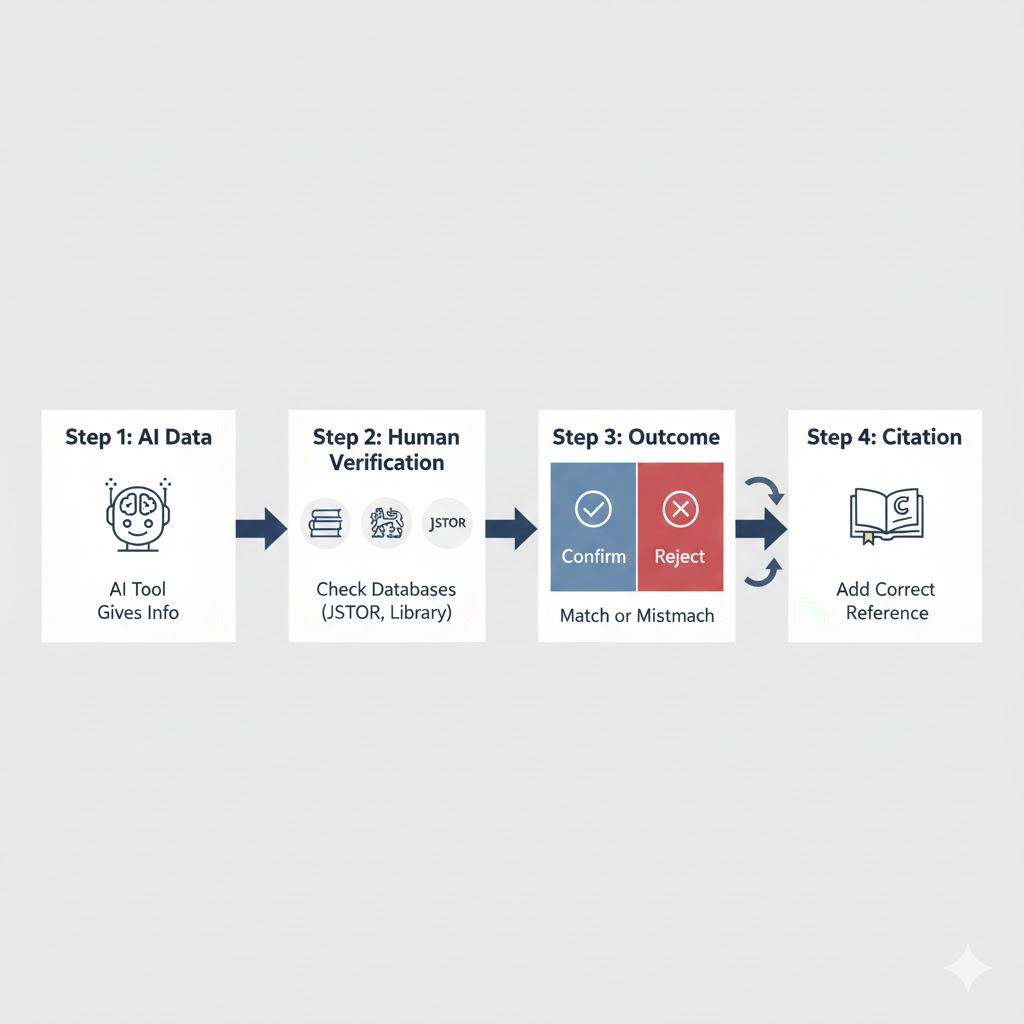
One of the greatest risks of using automated tools for research is “hallucination”—a phenomenon where software makes up facts, quotes, or even entire books that do not exist. In a university setting, citing a fake source is a serious academic offence. To future-proof your degree, you must adopt a “trust but verify” mindset.
Every time a tool gives you a specific statistic or a historical date, you should manually check it against a reputable database like JSTOR, the British Library, or your university’s internal library portal. If a fact cannot be found in a physical book or a verified peer-reviewed journal, it has no place in your assignment. In 2026, accuracy is the most valuable currency a student has.
Strategies for Maintaining Academic Integrity
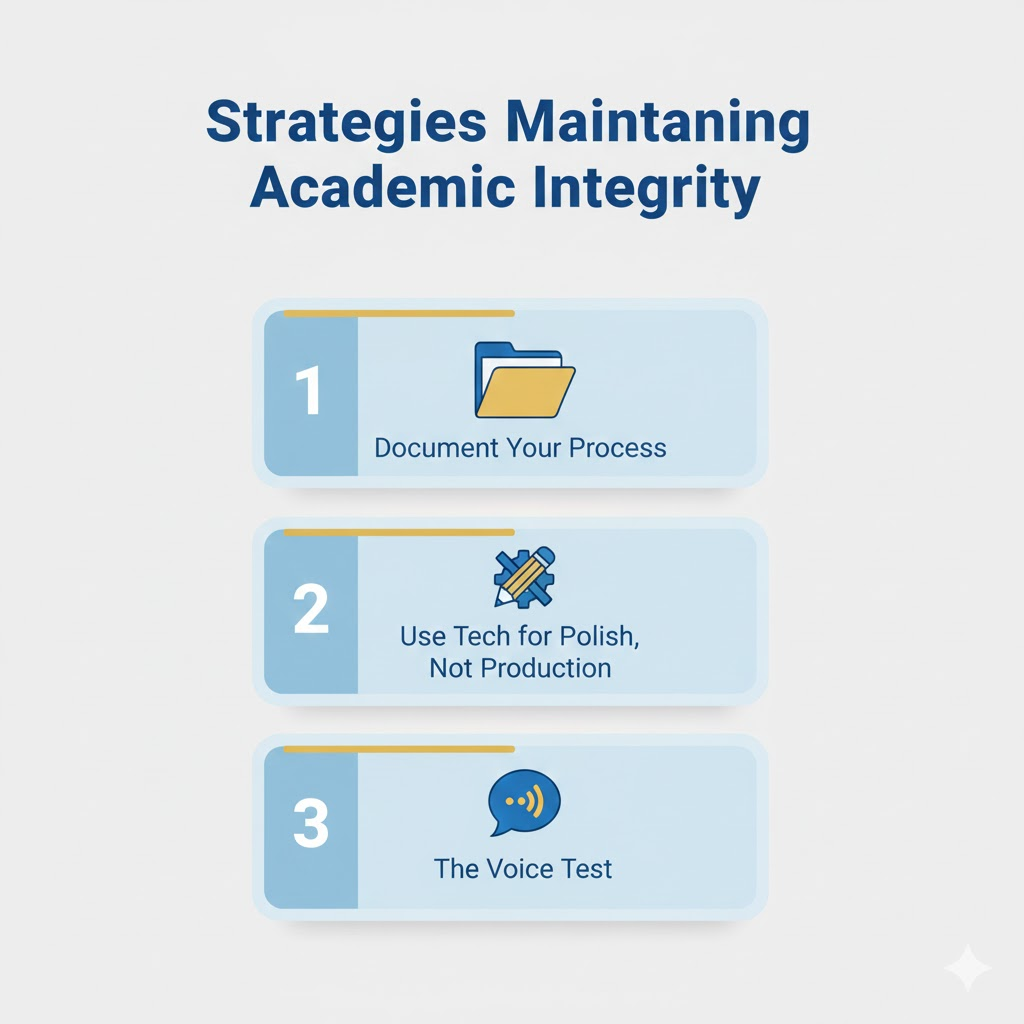
To ensure your work stands up to the scrutiny of 2026 standards, follow these three practical steps:
- Document Your Process: Keep a folder of your rough drafts, your initial notes, and your search history. If a university ever questions the “originality” of your work, you will have a clear trail of evidence showing how your ideas evolved over time.
- Use Tech for “Polish,” Not “Production”: It is perfectly fine to use a tool to check your grammar or to suggest a professional synonym. It is not fine to let it build the core argument for you.
- The “Voice” Test: After you finish a paper, read it out loud. If it sounds like a set of robotic instructions, it’s probably been influenced too much by external software.
FAQ: Academic Integrity in 2026
Can I use AI to write my assignment in the UK?
No. In 2026, submitting AI-generated text as your own is considered plagiarism. However, you can use AI to help brainstorm ideas or explain difficult concepts as long as the final writing is your own.
Will my university know if I used AI?
Most UK universities use advanced software that detects “non-human” writing patterns. It is always safer to use AI only for research and write the actual assignment yourself.
Is it safe to use AI for proofreading?
Yes, most institutions allow AI for checking spelling and grammar. Always check your specific department’s handbook for their latest “Acceptable Use Policy.”
About the Author
I am part of the expert team at MyAssignmentHelp, dedicated to helping students navigate the evolving landscape of 2026. I provide the guidance needed to ensure your research is robust and your academic integrity remains protected.