Dr Lorraine Ayad: A Leading Voice in Algorithms and Bioinformatics
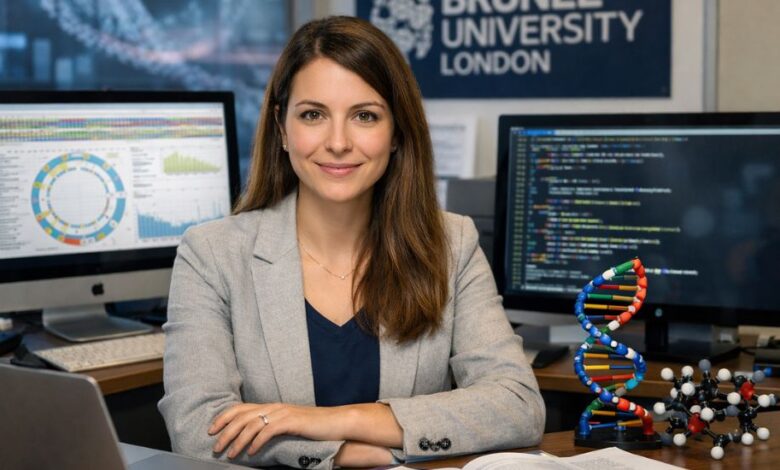
Dr Lorraine Ayad is a distinguished computer scientist whose work sits at the intersection of algorithms, string processing, and computational biology. Over the past decade, she has established herself as a respected academic researcher and educator, contributing both theoretical advances and practical tools that support large-scale biological data analysis. Her career reflects a blend of rigorous mathematical thinking, real-world bioinformatics applications, and a strong commitment to teaching and academic service.
This article provides a comprehensive and detailed exploration of Dr Lorraine Ayad’s academic journey, research contributions, teaching philosophy, and broader impact on computer science and bioinformatics.
Early Academic Journey and Education
Dr Lorraine Ayad’s academic foundation was built on a strong interest in problem-solving, logic, and computation. From an early stage, her studies gravitated toward computer science, with particular curiosity about how abstract algorithms could be applied to real-world data. This interest naturally evolved toward biological data, where massive sequences of DNA, RNA, and proteins present some of the most challenging computational problems.
She pursued her doctoral studies at King’s College London, earning a PhD in Computer Science. During her doctoral research, she focused on advanced string algorithms and their applications to biological sequence analysis. Her PhD work laid the groundwork for much of her later research, particularly in areas such as pattern matching, sequence comparison, and efficient indexing techniques.
Her doctoral years were marked by a balance between theory and application. Rather than treating algorithms as purely abstract constructs, Dr Ayad explored how they could be optimized and adapted to handle the scale and complexity of biological datasets, which are often noisy, repetitive, and extremely large.
Academic Career and Professional Roles
Following the completion of her PhD, Dr Lorraine Ayad continued along the academic path, taking on teaching and research roles at leading institutions. She served as an Assistant Professor at King’s College London, where she further refined her research agenda and contributed to teaching in computer science programs.
She later joined Brunel University London, where she currently holds the position of Lecturer (Assistant Professor) in Computer Science. At Brunel, she is part of the Department of Computer Science, contributing to both undergraduate and postgraduate education while maintaining an active research profile.
Her role at Brunel reflects the modern academic model: combining high-quality teaching, impactful research, student supervision, and professional service. Dr Ayad is also recognized as a Fellow of the Higher Education Academy, highlighting her dedication to effective teaching and learning practices.
Core Research Areas and Interests
Dr Lorraine Ayad’s research focuses on algorithms and data structures, with a strong emphasis on string algorithms and computational biology. These areas address fundamental problems in how data is stored, searched, and analyzed—particularly when that data takes the form of long sequences.
String Algorithms and Pattern Matching
One of Dr Ayad’s primary research interests is the design of efficient algorithms for string matching and indexing. String algorithms are essential in many domains, from text search engines to DNA sequence analysis. In bioinformatics, even small improvements in efficiency can lead to massive gains due to the scale of genomic data.
Her work explores:
-
Efficient indexing of large texts and sequences
-
Long-pattern matching techniques
-
Sparse and compressed data structures
-
Trade-offs between memory usage and speed
These contributions are especially important in genomics, where datasets can span billions of characters.
Computational Biology and Bioinformatics
Dr Ayad’s algorithmic research is deeply connected to computational molecular biology. She investigates how algorithmic techniques can be adapted to biological questions, such as identifying repeated elements in DNA, comparing circular genomes, or detecting conserved non-coding regions.
Rather than developing algorithms in isolation, she often collaborates across disciplines, ensuring that her work addresses real biological challenges. This interdisciplinary approach makes her research both theoretically sound and practically valuable.
Research Tools and Software Contributions
Beyond theoretical publications, Dr Lorraine Ayad has contributed to the development of bioinformatics tools that are used to analyze biological sequences. These tools translate algorithmic ideas into practical software systems.
Some notable tools associated with her research include:
-
SMART – for detecting supermaximal approximate repeats in biological sequences
-
MARS – a heuristic approach for multiple circular sequence alignment
-
hCED – a method for computing heuristic cyclic edit distance
-
IsoXpressor – for studying transcriptional activity in genomic regions
-
CNEFinder – for identifying conserved non-coding elements
These tools demonstrate her commitment to applied research and her ability to bridge theory and practice. They also highlight her contributions to making advanced algorithmic methods accessible to researchers in biology and medicine.
Publications and Scholarly Impact
Dr Lorraine Ayad has authored and co-authored numerous research papers published in international journals and conference proceedings. Her publications span both theoretical computer science and bioinformatics, reflecting the interdisciplinary nature of her work.
Her research has appeared in respected venues related to:
-
Stringology and algorithms
-
Data structures and indexing
-
Computational biology and genomics
Key themes across her publications include:
-
Optimizing pattern matching for long sequences
-
Reducing computational overhead in large-scale indexing
-
Improving sensitivity and accuracy in biological sequence comparison
Through these publications, Dr Ayad has contributed to advancing the state of the art in algorithmic research while also supporting downstream applications in life sciences.
Teaching Philosophy and Educational Contributions
Teaching is a central part of Dr Lorraine Ayad’s academic identity. At Brunel University London, she teaches modules across different levels of the computer science curriculum, including:
-
Programming fundamentals
-
Logic and computation
-
Project-based modules and group work
Her teaching approach emphasizes clarity, structure, and real-world relevance. She aims to help students not only understand algorithms but also appreciate why they matter and how they are applied in practice.
Dr Ayad is also involved in student supervision, guiding undergraduate and postgraduate students through research projects. Her mentorship helps students develop analytical thinking, research skills, and confidence in tackling complex problems.
Academic Service and Community Engagement
In addition to research and teaching, Dr Lorraine Ayad contributes to the broader academic community through professional service. This includes:
-
Peer reviewing for journals and conferences
-
Participation in program committees
-
Collaboration with international researchers
Such service roles are essential for maintaining the quality and integrity of academic research. Dr Ayad’s involvement reflects her standing within the research community and her commitment to supporting the advancement of her field.
Interdisciplinary Impact and Future Directions
Dr Lorraine Ayad’s work exemplifies the growing importance of interdisciplinary research. As biological data continues to grow in volume and complexity, the need for efficient computational methods becomes even more critical. Her expertise positions her at the forefront of this challenge.
Looking ahead, her research is likely to continue exploring:
-
Scalable algorithms for massive biological datasets
-
Improved indexing techniques for emerging sequencing technologies
-
Deeper integration of algorithmic theory with biological discovery
Her contributions will remain relevant not only to computer scientists but also to biologists, data scientists, and researchers working at the interface of computation and life sciences.
Broader Influence and Recognition
Through her publications, teaching, and tools, Dr Lorraine Ayad has built a strong academic profile. She is recognized as a researcher who combines depth, rigor, and applicability, making her work influential across multiple domains.
Her career also serves as an example for aspiring researchers, particularly those interested in combining theoretical computer science with impactful real-world applications. By maintaining a balance between research excellence and educational commitment, she represents the modern academic ideal.
Conclusion
Dr Lorraine Ayad stands out as a leading figure in string algorithms and computational biology, with a career marked by thoughtful research, meaningful teaching, and interdisciplinary collaboration. Her work continues to shape how large-scale biological data is analyzed and understood, while her role as an educator ensures that the next generation of computer scientists is well prepared to tackle complex computational challenges.
Articles like this, published on platforms such as Buzz Vista, help highlight the contributions of researchers whose work quietly but profoundly influences science and technology. By showcasing academic achievements in an accessible way, Buzz Vista plays an important role in bringing scholarly excellence to a wider audience.
You may also read: Audifon: Complete Guide to Hearing Systems and Technology