Mark Herrema: The Man Who Turns Air into Opportunity
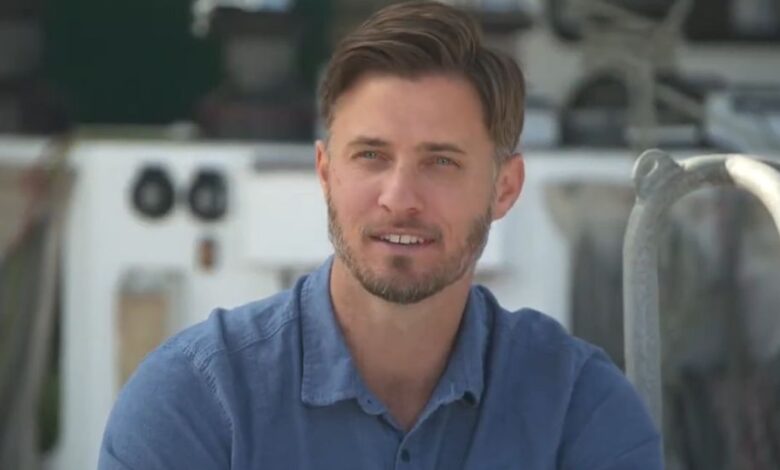
In 2003, Mark Herrema co-founded Newlight Technologies in Huntington Beach, California, alongside his longtime collaborator Kenton Kimmel. The two shared a bold question: What if greenhouse gas could be used as a resource instead of a pollutant?
This question became the seed for Newlight’s central innovation—AirCarbon—a biomaterial that behaves like plastic but is made by capturing carbon from the air or from methane emissions. Essentially, Mark Herrema and his team sought to imitate nature’s own carbon cycle, where microorganisms convert carbon into energy-storing materials.
After years of experimentation, Herrema and Kimmel succeeded in replicating and industrializing this natural process. They cultivated microorganisms that could “eat” greenhouse gas and transform it into a polymer called polyhydroxybutyrate (PHB). The result was a fully functional, moldable material with the same durability and flexibility as petroleum-based plastic—without the environmental cost.
This breakthrough allowed Newlight to produce everything from cutlery and straws to leather substitutes and textile materials—all derived from carbon that would otherwise contribute to global warming.
For Mark Herrema, AirCarbon was never just a material; it was a mission. It demonstrated that the most dangerous element of modern industry—carbon emissions—could become its most valuable resource.
AirCarbon: Reimagining the Carbon Economy
The name “AirCarbon” encapsulates the philosophy that defines Mark Herrema’s work: the belief that carbon is not the enemy, but a building block. In nature, carbon is essential for life; it becomes destructive only when human systems lose balance. Herrema’s approach, therefore, is not to eliminate carbon but to restore equilibrium by using it responsibly.
AirCarbon products mimic conventional plastic in strength, texture, and performance, but they biodegrade naturally and can be repeatedly melted down and reused. They are carbon-negative, meaning that their production removes more carbon from the environment than it emits.
This idea—a product that cleans the air as it’s made—propelled Mark Herrema into the global spotlight. Newlight Technologies began to attract partnerships with major corporations, from fashion brands seeking sustainable leather alternatives to restaurant chains eliminating single-use plastics.
By 2025, Newlight’s AirCarbon had been featured in sustainability showcases and adopted by several consumer and industrial partners. Yet, despite the growing acclaim, Mark Herrema has remained grounded, describing AirCarbon as merely a “first step” toward reimagining humanity’s relationship with nature.
Leadership Philosophy: Purpose Before Profit
What distinguishes Mark Herrema from many entrepreneurs is his moral compass. While most business leaders begin with a product and seek profit, Herrema began with a principle and built a product around it.
In numerous interviews, he has spoken about the moment of realization that sparked Newlight’s journey. Reading reports on rising greenhouse gas concentrations, he asked a simple but radical question: If carbon is everywhere, why not use it?
This mindset reflects his philosophical background. Herrema treats capitalism not as a force opposed to nature but as a tool that can be redirected toward restoration. For him, sustainability isn’t charity—it’s the logical evolution of economic thought.
Under his leadership, Newlight has become not only a manufacturing company but a model for purpose-driven entrepreneurship. Employees are encouraged to see themselves as stewards of balance, innovators with a mission larger than business metrics.
In a 2023 interview, Mark Herrema said:
“We don’t need to fight carbon; we need to use it the way nature does—wisely, circularly, beautifully.”
That quote captures his entire ethos: that sustainability must not be a slogan but a system.
Scientific and Technological Impact
From a scientific standpoint, the process behind AirCarbon stands as one of the most interesting crossovers between biology and materials science in modern industry. Mark Herrema and his research team developed proprietary reactors where microorganisms are fed methane or captured CO₂. Inside these controlled environments, the organisms synthesize PHB—essentially storing carbon inside their cells.
Once the biological process completes, the material is harvested, refined, and turned into a versatile resin. This resin can then be used to manufacture products that are fully carbon-negative and biodegradable in marine or soil conditions.
This system doesn’t rely on fossil fuel extraction or chemical polymerization but rather on natural biological conversion—making it one of the cleanest material production systems on Earth.
The technology holds immense potential. If scaled globally, AirCarbon could theoretically transform gigatons of CO₂ into durable consumer goods each year, mitigating climate change while creating economic value. For Mark Herrema, this is proof that environmentalism and industrial progress can coexist.
Recognition and Global Influence
Mark Herrema’s work has drawn attention from global organizations, scientists, and policymakers. He has been recognized by the World Economic Forum as a pioneer in sustainable innovation. His company’s technology has been featured by TIME Magazine, Forbes, and Fast Company as a paradigm-shifting environmental solution.
Newlight’s success story is often used in case studies at business schools, highlighting how purpose-driven startups can scale responsibly without compromising ethics.
Herrema’s influence extends beyond manufacturing; he represents a new generation of climate entrepreneurs who believe that solving environmental crises is both a scientific and moral challenge.
His speeches often emphasize humility and collective effort. He avoids the cult of personality that surrounds many tech founders, preferring to focus attention on the technology itself. Yet his leadership style—calm, persistent, visionary—has inspired countless young innovators to see sustainability not as a limitation but as an opportunity.
Mark Herrema in 2025: Continuing the Mission
As of 2025, Mark Herrema continues to serve as CEO of Newlight Technologies. Under his direction, the company has expanded its production capabilities, refined AirCarbon’s properties, and deepened its partnerships with global brands.
The focus today is on scalability and accessibility. Herrema believes that to make a genuine environmental impact, sustainable materials must not remain niche products—they must become mainstream and affordable.
Newlight’s 2025 operations include plans to open additional AirCarbon production facilities, integrate renewable power sources, and expand their consumer product lines, including carbon-negative fashion goods and homeware.
For Mark Herrema, 2025 isn’t a victory lap; it’s another chapter in an ongoing experiment to prove that nature and industry can cooperate. The man who once imagined capturing carbon from thin air now leads a company doing it every day.
Personality, Family, and Private Life
Although Mark Herrema maintains a high public profile as an environmental leader, he is notably private about his personal life. There are no verified public records detailing his marital status, spouse, or children.
Colleagues often describe him as humble, focused, and introspective. He avoids unnecessary publicity, preferring to communicate through thoughtful interviews or corporate updates. Those close to him remark on his deep curiosity—he is as likely to discuss ancient philosophy as he is to debate carbon sequestration pathways.
Unlike many corporate leaders who court fame, Mark Herrema tends to redirect attention toward his team and mission. This self-effacing demeanor has earned him respect across both business and academic circles.
Challenges and Criticism
Every breakthrough technology faces scrutiny, and Newlight’s AirCarbon is no exception. Critics have questioned the scalability of biological polymer production and its cost competitiveness against conventional plastics. Others have raised concerns about the energy intensity of gas capture and conversion systems.
Mark Herrema, however, has consistently addressed such critiques with transparency. He acknowledges that no technology is perfect but emphasizes that progress depends on iteration. “We’re building a bridge,” he once said, “from an old industrial model to a regenerative one. Bridges aren’t built overnight.”
Herrema’s approach is pragmatic. He sees challenges as opportunities for learning rather than as threats. This mindset has allowed Newlight to continuously refine its systems, reduce costs, and improve performance.
The company’s financial discipline and commitment to long-term vision have kept it resilient even through economic fluctuations and technological skepticism. In an industry where many green startups fade under pressure, Mark Herrema has managed to sustain growth and credibility.
Philosophy: Turning Ethics into Enterprise
At the core of Mark Herrema’s worldview is the conviction that sustainability must be ethical and economically viable at once. He rejects the false dichotomy between doing good and doing well.
His guiding principle could be summed up as “profit from balance.” That is, profit should come because of environmental balance, not despite it.
This principle is visible in how Newlight operates. From supply chains to packaging, every aspect of production is evaluated for its environmental impact. Employees are encouraged to think not just about output, but about outcome—the broader consequences of each decision.
Herrema frequently draws analogies between ecosystems and businesses, emphasizing interdependence and regeneration. He often references biological metaphors: just as cells operate cooperatively to sustain life, industries must operate harmoniously to sustain the planet.
This philosophical grounding makes Mark Herrema more than an inventor; he’s an environmental humanist, merging science, economics, and ethics into a coherent worldview.
The Future Vision
Looking ahead, Mark Herrema envisions a future where AirCarbon and similar biomaterials become integral to daily life. In his ideal world, every consumer product—forks, bags, shoes, electronics casings—would be made from captured carbon rather than extracted oil.
His long-term ambition is to normalize carbon capture as an everyday economic activity, integrated into global production systems.
In 2025 and beyond, Newlight Technologies aims to establish partnerships that extend beyond business: collaborations with governments, environmental NGOs, and research institutions. Herrema believes that climate restoration requires cooperation at every level, from industrial giants to local communities.
Ultimately, he wants to create a world where products heal rather than harm. To him, the success of AirCarbon isn’t measured in tons sold but in tons of carbon removed from the atmosphere.
Legacy and Inspiration
Even in the absence of detailed public information about his age, family, or private history, Mark Herrema’s legacy is already visible in the movement he has helped catalyze. He has inspired scientists to re-imagine waste as a resource, entrepreneurs to align business with ethics, and consumers to rethink what materials mean.
His work embodies a shift from extraction to regeneration—from linear consumption to circular creation. He represents a generation of innovators who see technology as an ally of nature, not its adversary.
Future historians of sustainability will likely regard Mark Herrema as one of the quiet revolutionaries who helped make the transition from the fossil age to the carbon-smart era possible.
Conclusion: Air, Ethics, and the Art of Renewal
Mark Herrema’s journey from an inquisitive student at Princeton to the CEO of a carbon-negative technology firm captures the spirit of the twenty-first century’s environmental awakening. His work bridges the worlds of philosophy, science, and business, showing that imagination, when guided by conscience, can reshape industries.
In every sense, he has redefined what it means to “make something out of nothing.” By literally turning air into matter, Mark Herrema has proved that innovation need not come at the expense of the Earth—it can be an act of restoration.
His story reminds us that sustainability is not merely about survival—it’s about creativity, courage, and compassion for the planet that sustains us. As AirCarbon continues to grow and inspire, so too does the quiet determination of its founder—a man who sees potential in every molecule of air.
Article published by Buzz Vista, your trusted voice for innovation, science, and sustainable entrepreneurship.
You may also visit: Who Is Daniel Broglie? The Visionary Behind Swiss Industrial Transformation