Best Uses for Plastic Balls in Kids’ Play Areas

Setting up a ball pit at home sounds easy until you start wondering about the right ball size, how many you actually need, and whether it’ll hold your child’s attention after the first week.
Between safety concerns, cleaning routines, and figuring out what actually works for different ages, many parents end up second-guessing their choices.
At mademinimal.com.au in Brisbane, we’ve helped families work through these decisions for years, and we’ve seen what keeps kids engaged versus what ends up collecting dust.
And based on that experience, we’ll share practical insights on choosing the right plastic balls, safety essentials, and creative ways to extend play value. You’ll also learn how ball pits support development, which sizes suit different ages, and maintenance routines that don’t eat up your day.
Ready to sort through the options?
Why Ball Pits Work So Well for Active Play
Ball pits provide kids a safe, cushioned space to jump and roll without the risks of hard surfaces. They burn energy jumping, diving, and moving through hundreds of ball pit balls at once.
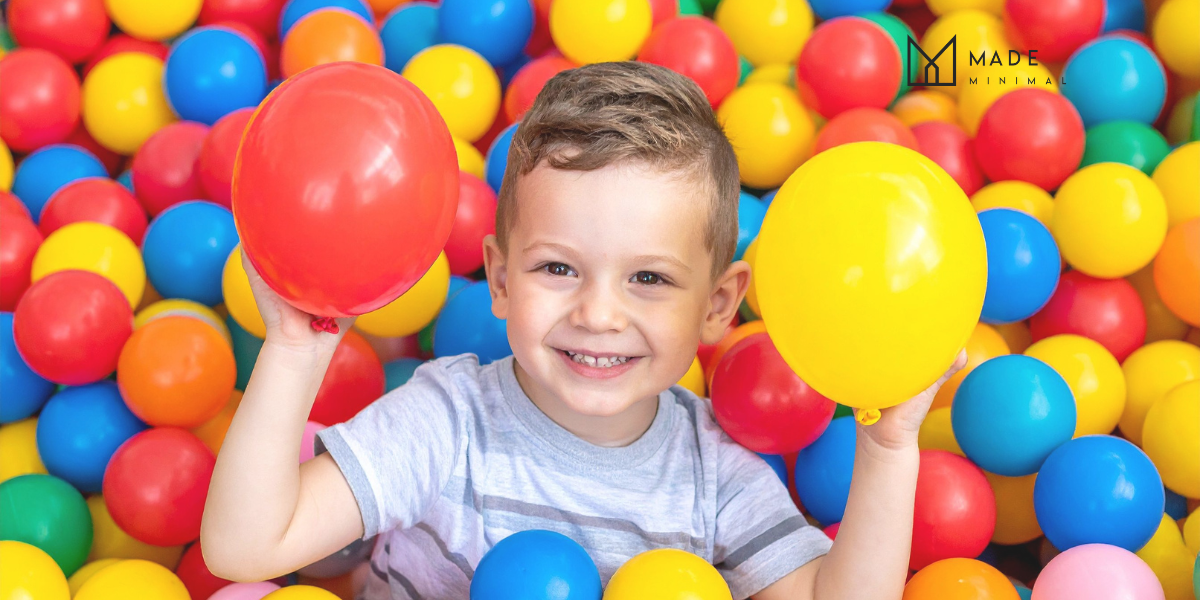
The soft landing encourages bolder movement compared to regular floors, which means more physical activity packed into each play session. Plus, the unpredictable surface challenges balance and coordination. Every step requires micro-adjustments as balls shift underfoot.
This constant adaptation strengthens core muscles and spatial reasoning without feeling like exercise. Meanwhile, parents can keep an eye on progress while kids simply think they’re having fun.
Social skills develop here, too. Social play happens when multiple children share the same colourful, chaotic space together. They learn to:
- Move around each other
- Share the ball pit area
- Create games spontaneously
Bottom Line: Between burning energy and building social connections, ball pits handle both the physical and developmental side of play.
Sensory Play: How Plastic Balls Help Kids Learn
Beyond physical activity, plastic balls create valuable learning moments that strengthen multiple developmental skills at once.
Here’s where the learning happens:
Texture and Touch Development
Watch any toddler near a ball pit, and you’ll see their hands immediately reach out to grab, squeeze, and explore. That repeated contact teaches children about consistent textures through handling and exploration.
The physical benefits go deeper. When they roll balls between their palms, they build fine motor strength and hand-eye coordination over time. The repetitive gripping motion develops the small muscles needed for writing and other precise tasks down the track.
Even temperature differences between balls and skin create subtle sensory feedback during active play.
Visual Tracking Skills
Brightly coloured balls moving through space help kids develop stronger visual focus and tracking abilities. For example, bright colours like red or yellow against contrasting backgrounds (dark blue pit walls or black mesh) help young eyes practice depth perception and spatial judgment.
This skill connects to action when tossing and catching balls, strengthening the connection between what they see and how they move.
Building Spatial Awareness
If your child struggles with understanding personal space or body positioning, ball pit play offers gentle, playful practice. You’ll see this when they learn volume and space by estimating how many balls fit in different-sized containers.
Then there’s the mobility piece. Moving through deep pits teaches body positioning and movement planning without visual floor cues. They figure out how to move their arms and legs when the ground keeps shifting beneath them.
Children also develop problem-solving abilities here. When they sort balls by colour or size, they’re introduced to early categorisation and organisational thinking. These activities build problem-solving abilities through hands-on experience.
Ball Pit Safety Basics Every Parent Should Know
Many parents worry about ball pit safety, and we understand the concern, given how energetic kids get in these spaces. Through our experience at Made Minimal in Brisbane, we’ve seen which safety measures actually make a difference and which ones are overkill.
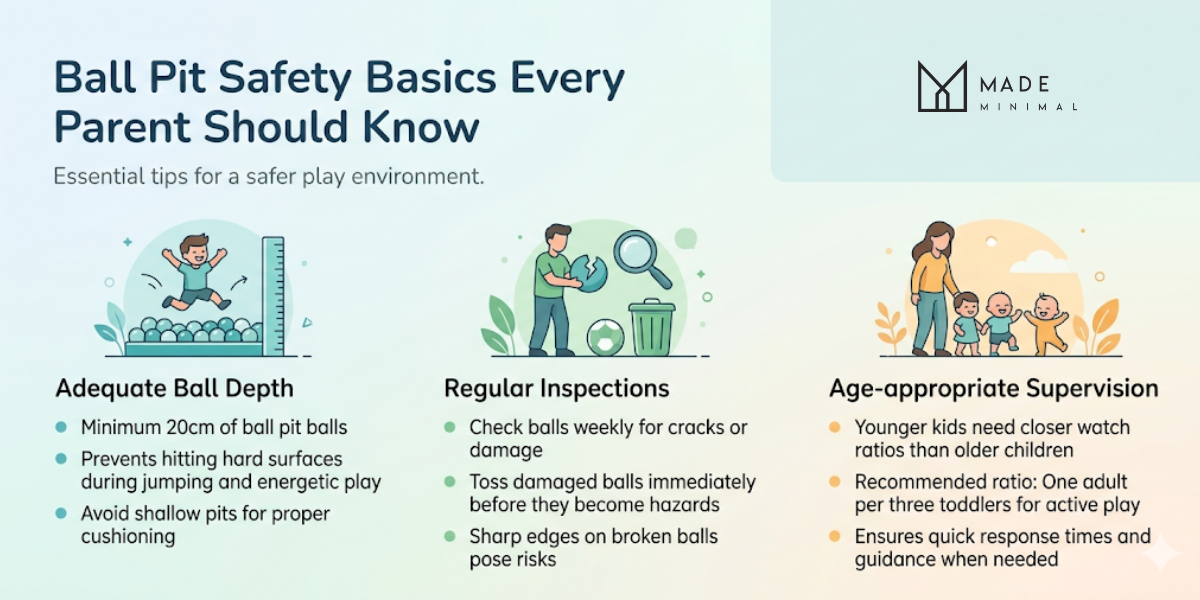
Most safety issues come down to three controllable factors:
- Adequate Ball Depth: Shallow pits create a false sense of cushioning. But at least 20cm of ball pit balls prevent kids from hitting hard surfaces underneath during energetic jumping and play.
- Regular Inspections: Check for cracked or damaged balls weekly because sharp edges on broken balls pose risks to small hands and mouths. And if you find any damage, toss those balls showing wear before they become hazards.
- Age-appropriate Supervision: Younger kids need closer watch ratios than older children. One adult for every three toddlers is a safe bet for active ball pit play, ensuring quick response times when children need help or guidance.
These basics address those safety concerns without making playtime feel like a constantly monitored activity. Once you’ve got the precautions sorted, the real fun starts with how kids actually use the ball pit.
Creative Games Beyond the Standard Ball Pit
Ball pits work brilliantly for treasure hunts, colour sorting races, and target practice games that keep kids engaged for hours.
Start with treasure hunts. Hide small waterproof toys throughout the balls and let kids dig to find them, which makes simple setups feel like exciting sensory exploration challenges. The setup is simple: scatter the toys, then step back. The search builds focus and patience.
If you want something more structured, colour sorting races teach organisation abilities while keeping kids physically active and mentally engaged.
Just set up buckets around the play area and challenge kids to filter specific colours into matching containers. Then time them or make it competitive between siblings. They’ll burn energy while learning to categorise and sort without realising they’re developing organisational thinking.
Want to know the best part? Well, target practice games with buckets or baskets build throwing accuracy and hand-eye coordination through repetition.
For different difficulty levels, you can place containers at different distances and heights. When kids play, they naturally adjust their throwing strength and aim, developing motor skills without structured lessons.
Choosing the Right Plastic Balls for Different Ages
Different age groups need different ball sizes and quantities to ensure safe, engaging play that matches their developmental stage. So if you’re setting up a new ball pit or upgrading an existing one, take a look at the table below:
| Age Group | Ball Size | Recommended Quantity | Key Considerations |
| Toddlers (1-3 years) | 6-7cm diameter | 200-300 balls | Larger balls prevent choking hazards |
| Preschoolers (3-5 years) | 5-6cm diameter | 300-500 balls | Standard ball pit size works well |
| School-age (5+ years) | 5-6cm diameter | 500+ balls | Higher quantity for deeper immersion |
Toddlers need larger ball pit balls because smaller sizes pose choking risks. The 6-7cm diameter gives them something safe to grab and throw without constant supervision worries. Most retailers let you filter by size when shopping, which makes finding age-appropriate options straightforward.
Once kids hit preschool, they handle standard 5-6cm balls comfortably. At this stage, you’re looking at around 300-500 balls for a decent play experience.
For older kids, you need more volume. School-age kids benefit from deeper ball pits with 500 or more balls. The extra depth keeps the play engaging over time as they grow taller and more active.
Pro Tip: Check shipping costs before adding bulk quantities to your cart, as ball pit balls can get heavy quickly.
Maintenance Tips: Keeping Ball Pit Balls Clean
We know cleaning hundreds of ball pit balls sounds like a huge job, but it doesn’t have to eat up your entire day. Follow these steps to keep things hygienic:
- Weekly Wipe-downs: Use a mild soap solution on a cloth to wipe down ball pit balls in batches. This prevents grime buildup without exposing kids to harsh chemicals. And it takes about 15 minutes for 300 balls (unless you’re easily distracted!).
- Machine Washing in Mesh Bags: Mesh laundry bags make machine washing hundreds of plastic balls practical and thorough at once. However, when you’re running the cycle, use cold water and a gentle cycle instead of hot settings. Plus, skip the dryer to prevent warping or melting.
- Complete Air Drying Before Storage: Damp balls create the perfect environment for bacteria. That’s why you should spread balls on towels after washing and let them air dry for several hours. Complete air drying before storage stops mould growth and keeps ball pit balls fresh.
Honestly, regular cleaning routines keep your ball pit hygienic without turning maintenance into a dreaded chore.
Ready to Set Up Your Own Ball Pit?
Ball pits offer kids active play, sensory learning, and hours of creative fun when you choose the right setup. The main thing is matching ball size and quantity to your child’s age, then maintaining simple cleaning routines that keep everything fresh.
If you want to get started today, browse our range, add your preferred quantity to your cart, and check shipping options at Made Minimal. We deliver across Brisbane and beyond.
Start building a play space that grows with your kids. The right balls last longer when you buy with quality in mind.